What 35+ Years in the Elevator Industry Taught Me About Leadership
Jun 22, 2026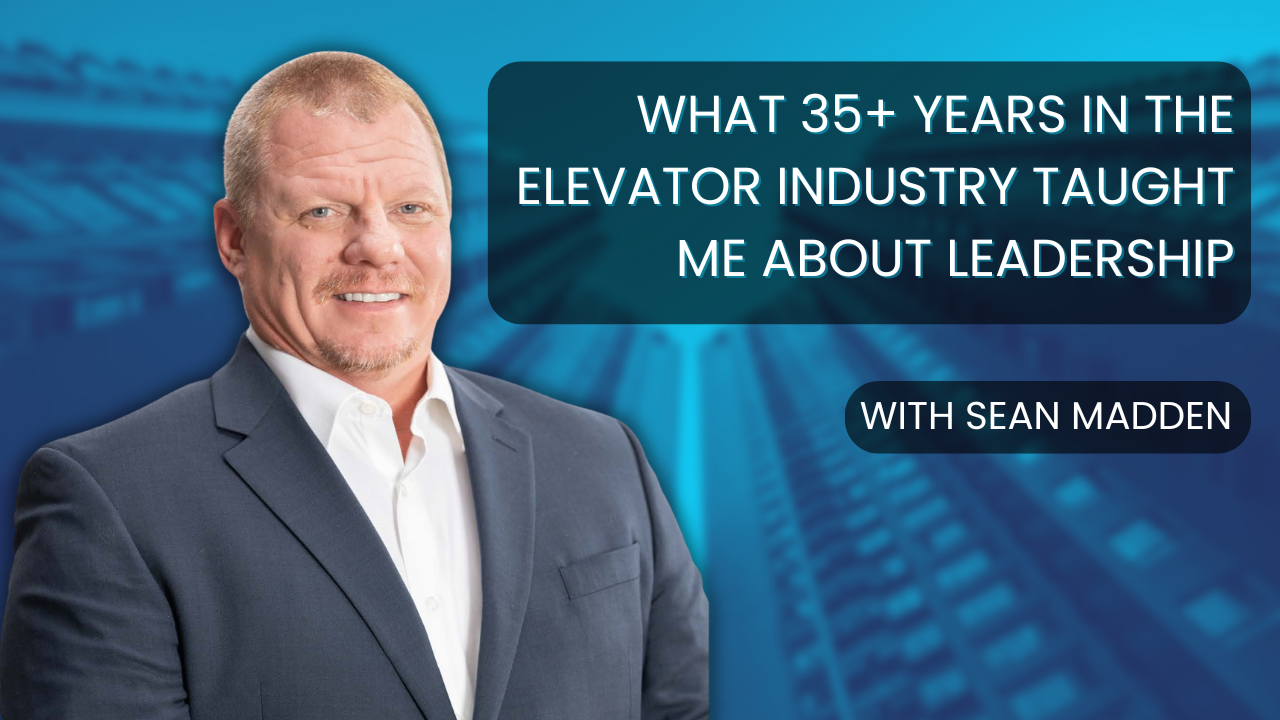
I've spent more than 35 years in the elevator industry, and if there's one thing I've learned, it's that leadership is something to be learned, experienced, and refined over time.
It's something you continue to work on, even when you think you've got it down pact. I don't care if you've been in business for 5 years or 50 years. The minute you think you've got it all figured out is usually the minute you stop growing.
When I first got into this industry, there weren't workshops, podcasts, books, communities, chat GPT, and resources available to business owners like there are today. You learned through experience and mistakes. Sometimes those mistakes were expensive and embarrassing, but they created valuable lessons and stories that became a part of my journey.
A lot of what I know today came from doing things the old-fashioned way.
If I had to narrow it down, there are a handful of lessons that have shaped how I lead, how I run a business, and how I help other elevator companies today.
Leadership Means you Never Stop Learning
One of the biggest misconceptions about leadership is that once you become the owner, the president, or the person in charge, you're supposed to have all the answers now.
You don't.
In fact, some of the best leaders I know ask more questions than anyone else. They read and they listen to understand. They seek out mentors, invest in coaching, and search until they've found the right support.
They stay curious in their pursuit to learn more and do better. Because they know the business can only grow to the extent that they do.
If you aren't developing yourself, eventually your business will feel it. So will your people and then so will your profits.
Your Job Isn't Just to Develop Yourself
Your job is also to develop your people.
Businesses continually grow because everyone gets better in their skillset, relationships, and the impact their efforts have on the company.
I say this all the time: You've got to get the whole ship rowing in the same direction.
Everybody has to understand where you're going as a company. Everybody has to be on the same page and pulling toward the same goal. If one person is rowing one direction and another person is rowing somewhere else, the boat doesn't move.
As leaders, it's our responsibility to create that alignment. That means communicating clearly when setting expectations, creating incentives for personal development, and helping people understand how their role contributes to the bigger picture.
It also means investing in your people. It's necessary to their growth and the growth of the company.
If we're not developing our people, we're limiting our business potential.
Stop Waiting for Perfect
This one took me a while to learn and I still get hung up on in it sometimes.
When you're determined (and a little hard-headed), it's easy to get stuck because you want everything to be perfect before your next move. But the process isn't perfect.
The system will always need tweaks and adjustments, the presentation could be changed 100x over, and AI will always have another suggestion to be made.
If I could go back and tell my younger self one thing, it would be:
If it's 80% there, go.
You can improve, adjust when needed, and refine it later. But you can't improve something that never gets implemented.
I've seen too many opportunities delayed for myself and other elevator business owners because someone was waiting for perfect.
Perfect is expensive though and progress is better than perfection.
So if you've got something sitting on your desk right now that's 80% complete, get it out there. Try it out and learn from it. Make it better later.
Keep It Stupid Simple
I run a lot of decisions through one filter:
KISS. Keep It Stupid Simple. It's an old principle that says complexity usually gets in the way of execution, and I've found that to be true in business time and time again.
As entrepreneurs, we have a way of overcomplicating things.
But the more complicated something becomes, the harder it is to execute consistently. Simple can be repeated and scaled. It's what sticks and gets remembered and used daily by your leadership team and employees.
Sometimes the best thing you can do as a leader is to step back and ask: How can we make this stupid simple?
Build a Business That Doesn't Depend on You
This might be one of the hardest lessons for business owners. It's one of those things that needs to start sooner rather than later, but always gets back-burnered in the order of priorities. It's especially difficult to implement when you've built the company from the ground up.
In the beginning, it's easy to be involved in everything. Heck it even feels good to be the one to save the day. I always enjoyed being known as a problem-solver myself.
But that's not leadership.
When we choose to solve everyone else's problems, we develop dependency.
Your team should be able to solve problems on their own and make decisions without you. They should be able to operate without you standing over their shoulder or giving them the OK to move forward.
That's how businesses grow and how true leaders are developed. And that's how you create a company that can continue to move forward even when you're not in the room.
In order to get that ball rolling, your people have to know exactly what success looks like to them and how it's measured.
They need consistent check-ins and guidance that allows them to do their best work.
(And here's the hardest part)
You've got to step back and trust your people enough to execute. People will make mistakes and fall flat on their faces. The proverbial ball will inevitably be dropped, but it's what we do in those moments that determine what kind of leader we are.
Now, if you've read this far I'm pretty sure you want to be the best leader you can be. So we help them get back on their feet, ask them where we went wrong, and develop a plan to prevent those kinds of mishaps from taking place again.
It's easier said than done, I know. But practice letting go and letting your people lead.
Visibility Solves Problems Before They Become Bigger Problems
One of the biggest mistakes I made was managing the business by my gut-feeling.
"I think we're doing okay."
"I think revenue looks good."
"I think my team is on track."
Assuming and glancing over reports the CPA handed you isn't enough, though. You need visibility in your finances, in the operation, and absolutely in your leadership.
You need to know where you're winning, where you're struggling, where your attention is needed, and make confident business decisions based on the data and knowledge you have.
The same goes for your people. That's why I believe so strongly in KPIs. KPIs have always been an interesting topic in our industry because of how their often perceived.
If you go the big business route, they're perceived as a "gotcha" moment. But that shouldn't be the motive behind using them in your elevator business.
Think of them as the bumpers for a team member. They're there to keep people on track and identify problems before they become costly. The earlier you can see an issue forming, the more options you have to take action before it gets worse.
Having visibility and oversight in the business gives you those options.
Final Thoughts
After 35+ years in this industry, I've learned I will never have all of the answers when it comes to running a business.
But I have learned as an entrepreneur you have to possess a willingness to continue learning. You have to commit to develop people, keeping things simple, creating cohesion, and letting go of perfection.
All of those components will contribute to greater visibility within the business as a whole. And you can finally focus on the business instead of drowning in the weeds within it.
Most importantly, it's understanding that your business will only go as far as your leadership allows it to go.
But the good news I have for today is that leadership is a skill.
Which means it can be learned, improved, and strengthened over time. Like any skill, it gets better when you're willing to look honestly at where you are today and commit to getting better tomorrow.
If you're ready to gain more visibility into your business, strengthen your leadership team, and identify the areas that are holding your company back, I'd be honored to help.
The Elevator Business Diagnostic was designed to do exactly that.
In this private 90-minute session, we'll take a deep dive into your business to uncover hidden opportunities, identify the bottlenecks that may be slowing your growth, and evaluate the areas that need greater visibility, stronger leadership, or better systems.
You'll walk away with a customized 12-week roadmap and clear priorities so you know exactly where to focus next.
If you know there's another level for your business but aren't quite sure what's standing in the way, let's uncover it together by clicking here.
When you're ready, here's how we can work together:
1. Elevator Business Diagnostic 🔍
A private 90-minute strategy session designed to identify the critical constraint creating pressure in your elevator business and build a clear 12-week roadmap for what needs to happen next.
👉 BOOK NOW
2.The Elevator Business System ⚙️
A 12-week implementation experience for elevator business owners ready to strengthen leadership, operations, accountability, and business structure with direct guidance from Sean Madden.
3. Strategic Partnership 🤝
A six-month executive advisory engagement for business owners seeking a long-term strategic partner to strengthen leadership, execution, and sustainable growth.